Park Slope is widely regarded as one of the most family-friendly enclaves in Brooklyn. With its proximity to Prospect Park, its rows of stately Victorian brownstones, and its abundance of organic markets, it is a neighborhood where parents go to great lengths to ensure a healthy environment for their children. In early 2026, one young family—living in a beautifully maintained pre-war building near 7th Avenue—thought they had everything under control. They drank filtered water from their refrigerator and used a high-end showerhead in their master suite. To their eyes, the water in their home was crystal clear and perfectly safe.
Everything changed on a Tuesday evening during the “witching hour” of bath time. As the mother began filling the white porcelain tub for her six-month-old son, she noticed a subtle shift. Against the stark white background of the tub, the water wasn’t clear; it was a distinct, pale yellow. By the time the tub was six inches deep, the hue had deepened into something resembling weak tea. It was a terrifying moment for a parent, sparking an immediate investigation into the contaminant types that could be lurking behind the walls of their prestigious Brooklyn address.
The Illusion of Purity: Why Small Volumes Hide Big Problems
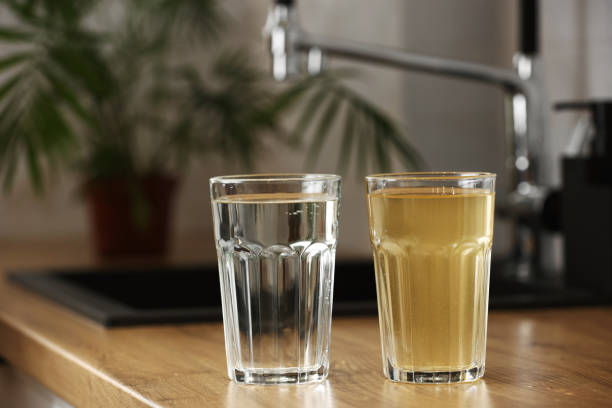
The family’s first question was why they hadn’t noticed this earlier. They had been living in the apartment for over a year. The answer lies in the physics of light and volume. When you fill a small drinking glass, the path of light through the water is short, making it difficult to detect slight discolorations. However, when you fill a large, white-bottomed vessel like a bathtub, the volume of water creates a “deepening” effect that amplifies the presence of dissolved minerals and sediments.
For many Park Slope residents, this “yellowing” is a classic sign of localized infrastructure issues. While New York City’s water enters Brooklyn at a high level of purity, the “last mile” of delivery—the pipes under the street and the risers inside the building—can introduce various substances. In 2026, we are seeing more cases where “clear” drinking water is actually carrying a significant load of contaminant types that only become visible in large quantities or under specific temperature conditions.
The Culprits: Iron, Manganese, and the Lead Hitchhiker
The yellow tint in the bathtub was eventually traced to a combination of oxidized iron and manganese. In the aging plumbing systems of Park Slope, these minerals often flake off the interior of galvanized steel or cast-iron pipes. This is frequently triggered by a “scouring” event—such as a nearby fire hydrant being opened or a sudden increase in water pressure from the city main.
However, as we often discuss on our blog, the color itself is only half the story. Iron and manganese act as “scavengers.” As they travel through the lead service lines that still connect many Brooklyn brownstones to the street, they can physically “pick up” lead particles. The yellow water wasn’t just an aesthetic nuisance; it was a delivery vehicle for heavy metals. For a family with a baby, the health impacts of lead exposure—even through bathing—are a major concern, as infants often splash and swallow water during bath time.
The Role of the Water Heater: A Concentrated Risk
The family also noticed that the yellow tint was far more pronounced when the water was hot. This pointed to a common issue in multi-family Brooklyn buildings: the accumulation of sediment in the water heater or the building’s central boiler. Over years of service, minerals settle at the bottom of these tanks, creating a thick “sludge” that can harbor various contaminant types.
When the heater is under high demand, this sediment is stirred up and sent into the hot water lines. In our faq, we highlight that hot water is naturally more corrosive than cold water, meaning it is more likely to leach metals from the building’s internal plumbing. For the Park Slope parents, the “yellow bath” was a direct result of their water heater releasing years of trapped mineral scale and bacterial biofilm into their child’s environment.
Interpreting the Health Impacts for Infants
The primary anxiety for the parents centered on the health impacts of the water on their baby’s sensitive skin and developing system. Pediatric dermatologists have noted that high levels of minerals like iron and manganese in bath water can disrupt the skin’s natural barrier, leading to or exacerbating conditions like eczema and “cradle cap.”
Furthermore, if the yellow water contains trace amounts of lead or other heavy metals, the risk moves from dermatological to neurological. In 2026, the consensus among health experts is that there is no safe level of lead exposure for infants. The skin is the body’s largest organ, and while it is generally a good barrier, prolonged exposure to contaminated water—especially if it is accidentally ingested during play—is a health flag that cannot be ignored.
Seeking Sustainable Solutions for Brooklyn Apartments
Faced with the reality of their plumbing, the family sought out effective solutions. In a Park Slope co-op or rental, you often cannot simply replace the building’s entire plumbing stack. Instead, the family had to implement a localized defense system.
Their solutions included:
- High-Capacity Point-of-Entry (POE) Sediment Filter: A unit installed at the main water intake for the apartment to catch large-scale iron and rust particles before they reach the tub.
- Specialized Shower and Bath Filters: Utilizing KDF-55 media to specifically target heavy metals and reduce the “yellowing” effect in the bathroom.
- Routine Water Heater Maintenance: Working with the building’s super to perform a “deep flush” of the unit to remove the accumulated sludge.
These steps transformed their bath time from a source of anxiety back into a nightly ritual of joy. As they shared on a local parenting blog, the difference was visible immediately; the water in the tub returned to its clear, sparkling state.
Why Visual Checks Are Not Enough
The most important lesson for any Brooklyn resident is that “looking fine” is not a scientific measurement. Many dangerous contaminants—including lead, arsenic, and PFAS—have no color, taste, or odor at all. The yellow water in the tub was a lucky break for this family because it provided a visible “warning light” for a deeper problem.
In 2026, the gold standard for home safety is a professional water audit. If you live in an older building, you should be performing a comprehensive test at least once a year, or whenever you notice a change in the color or scent of your water. Our faq section provides a roadmap for how to distinguish between a “neighborhood main break” and a “building plumbing failure.”
Conclusion: Protecting the Next Generation in Park Slope
The yellow water in that Park Slope bathtub was a wake-up call for an entire building. It reminded the residents that the “champagne of tap water” is only as good as the pipes it flows through. By taking ownership of their “last mile” of water delivery, this family not only protected their baby but also sparked a building-wide conversation about infrastructure and health.
The most effective next step for any parent who has noticed a slight tint in their tub—or who simply wants to be proactive—is to move from visual checks to data-driven verification. If your water looks “off” in large volumes, or if you want to ensure your child’s bath is truly safe, you should contact a specialist today. We can help you identify the specific contaminant types in your home and find a solution that keeps your Brooklyn family healthy and thriving.