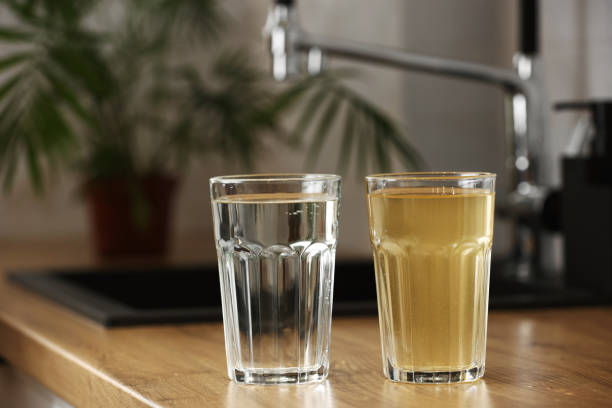
For many residents in the high-density neighborhoods of Jersey City or the historic brownstones of Hoboken, turning on the tap to find a pale yellow tint in the water is a jarring experience. The immediate assumption, often reinforced by a quick search or a call to a neighbor, is “rust.” We are conditioned to believe that yellow or orange water is simply iron leaching from aging municipal mains or old galvanized pipes.
As we move through 2026, water quality experts are seeing a more complex picture in North Jersey’s urban infrastructure. While iron is a common culprit, it is far from the only one. If your water has a persistent yellow hue—especially if it doesn’t clear up after a few minutes of flushing—you might be looking at a completely different chemical or biological event.
Understanding the “Why” behind the yellow is essential. Not all causes are treated the same, and assuming it is just “iron” could lead you to install a filter that doesn’t actually solve the problem.
Tannins: Nature’s Tea in Your Taps
One of the most frequent “non-iron” causes of yellow water is the presence of tannins. Tannins are organic compounds produced by decaying vegetation and fallen leaves. Think of it like a natural tea: as water passes through peaty soil or leaf-cluttered reservoirs, it picks up these organic pigments.
In the Tri-State area, our water often originates in sprawling forest-surrounded reservoirs. During heavy rain events or seasonal shifts, a higher concentration of these organics can enter the supply. Unlike iron, which is a mineral particle, tannins are dissolved. This means that if you let a glass of yellow water sit on the counter, iron will eventually settle at the bottom, but tannins will keep the water yellow indefinitely.
While tannins are primarily an aesthetic issue, they represent a category of contaminant types that can interfere with other water treatment processes, such as UV sterilization or ion exchange.
The Chlorine-Organics Interaction
In cities like Fort Lee and Jersey City, the water is heavily treated with chlorine to ensure it remains disinfected as it travels to your high-rise. However, when chlorine interacts with high levels of organic matter (like the tannins mentioned above), it can create a yellow-tinged chemical byproduct.
Even more concerning than the color is what happens microscopically. This interaction can lead to the formation of Disinfection Byproducts (DBPs), such as Trihalomethanes. While the city works to keep these within federal standards, a sudden yellow shift often signals a “spike” in organic load. For homeowners concerned about the long-term health impacts of these byproducts, the yellow tint is a visual warning to use carbon filtration for drinking and cooking.
Galvanic Corrosion and Zinc Leaching
If you live in a renovated Hoboken condo where new copper was connected to old galvanized steel, you might be seeing the effects of galvanic corrosion. While iron (rust) is the most famous byproduct of this reaction, the zinc coating on older pipes can also dissolve into the water.
High concentrations of zinc can impart a yellowish-metallic sheen to the water. This is often accompanied by a bitter taste. Unlike municipal iron issues, this is a “localized” event happening within your building’s walls. We often address how to differentiate between city-wide and building-specific issues in our FAQ section.
Chromium-6: The Invisible Risk with a Visible Hint
While rare in the primary NYC/NJ municipal supply, certain industrial legacy sites in Northern New Jersey have historically dealt with Chromium-6 (Hexavalent Chromium). In very high concentrations, Chromium-6 can impart a yellowish-green tint to water.
The EPA monitors chromium levels strictly, but in 2026, localized groundwater intrusion in older, unlined service pipes remains a topic of study for environmental advocates. If your water has a “neon” or greenish-yellow hue rather than an “earthy” yellow, it warrants immediate professional testing.
Biological Biofilms and Pipe “Sloughing”
Sometimes the yellow isn’t a chemical at all—it’s biological. Inside the miles of pipes under our streets, a thin layer of bacteria known as a “biofilm” exists. Usually, this layer is stable. However, when the city performs nearby work or a fire hydrant is opened, the sudden change in pressure can cause the biofilm to “slough” off.
This organic material can tint the water yellow or light brown. It is often accompanied by a slight “musty” or “earthy” odor. On the Water Contamination Guide blog, we frequently track how local infrastructure repairs correlate with these biological surges in specific Jersey City wards.
How to Tell the Difference: The “White Bucket Test”
To find the right solutions for your home, you need to identify the source. A simple way to start is the White Bucket Test:
- Fill a white 5-gallon bucket with cold water.
- Let it sit for 24 hours.
- Inspect the bottom. If you see “sand” or “flakes” at the bottom and the water above is clear, you have an iron/sediment problem.
- Check the color. If the water remains yellow throughout and nothing has settled, you likely have tannins, dissolved organics, or a chemical byproduct issue.
Solutions: Targeting the Yellow
Because yellow water has multiple causes, a “one size fits all” filter often fails.
- For Tannins/Organics: You need an anion exchange system or a high-quality activated carbon block. Standard sediment filters will let tannins pass right through.
- For Iron/Sediment: A 5-micron spun-polypropylene filter or a backwashing greensand filter is the standard approach.
- For Chemical Byproducts: A Point-of-Use Reverse Osmosis (RO) system is the most effective. RO membranes are designed to strip away dissolved chemicals and heavy metals that smaller, cheaper filters miss.
Conclusion: Don’t Settle for “Legal” Water
In the urban landscape of 2026, we are often told that yellow water is “safe but secondary.” But water is the most important utility in your home. Whether the yellow is caused by harmless forest tannins or a more complex interaction of chlorine and aging pipes, it indicates that your water is not as pure as it could be.
By identifying the true cause of the discoloration, you can implement a targeted filtration strategy that protects your appliances, your skin, and your long-term health. Don’t assume it’s just rust—your water is telling a story about the infrastructure it traveled through to get to you.
If you are seeing persistent yellow water and the standard “flushing” isn’t working, please contact us today. We can provide guidance on specific testing panels that look for tannins and organics, helping you find the right solution for your specific North Jersey neighborhood.