In the competitive real estate market of Jersey City, maintaining a reputation for quality is everything. For one landlord managing a multi-unit property near the Journal Square PATH station, that reputation was recently put to the test. It didn’t involve a heating failure or a structural leak, but something much more pervasive: the water.
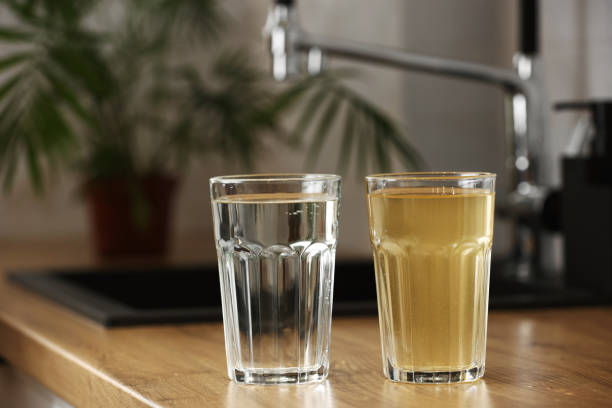
Multiple tenants began complaining that their tap water smelled and tasted like a public swimming pool. Some reported dry, itchy skin after showering, while others noticed a “bleach-like” odor that filled the kitchen every time they did the dishes. Initially, the landlord assumed it was just a temporary spike in municipal treatment. However, as the complaints persisted, he embarked on a journey through the complexities of urban water chemistry, ultimately learning that what seems like a simple “utility issue” is often a much deeper story about infrastructure and health.
The Chlorine Conundrum: Necessary but Noticeable
Chlorine is the backbone of the New York and New Jersey water treatment systems. It is added to the water supply to kill pathogens, bacteria, and viruses. Without it, the dense urban corridors of Hudson County would be vulnerable to waterborne diseases that were common a century ago.
However, there is a fine line between “safe” and “unpleasant.” In Jersey City, water travels through a complex network of pipes managed by the Jersey City Municipal Utilities Authority (JCMUA). To ensure that water reaching the furthest ends of the system remains disinfected, the initial dosage of chlorine must be significant.
When the landlord investigated the complaints, he discovered that his building was located relatively close to a primary distribution point. This meant his tenants were receiving water with very high residual chlorine levels—water that hadn’t yet had time for the chemical to “off-gas” or dissipate naturally through the system. This is a common phenomenon in our region, often categorized under aesthetic contaminant types because, while the water is technically legal, it is practically unusable for many.
The Hidden Science of Disinfection Byproducts (DBPs)
As the landlord dug deeper into the tenants’ concerns, he learned that the “chlorine smell” was often the tip of the iceberg. When chlorine interacts with organic matter—like the trace amounts of leaf litter or soil found in reservoir water—it creates new chemicals called Disinfection Byproducts (DBPs), specifically Trihalomethanes (THMs).
While chlorine itself is an irritant, these byproducts are a more significant concern for long-term health impacts. Studies have linked chronic exposure to high levels of DBPs to increased risks of respiratory issues and, in some cases, more severe long-term health challenges. For a landlord, this moved the issue from a “comfort” complaint to a “risk management” priority. He realized that “legal” water didn’t necessarily mean “optimal” water for his residents.
Why “Flushing” Didn’t Fix the Problem
The landlord’s first instinct was to tell the tenants to “let the water run.” In many water quality scenarios, flushing the pipes clears out stagnant water. But with chlorine, flushing often made the smell worse. Why? Because the municipal supply was consistently high in chlorine. Running the tap simply brought in a fresh, highly concentrated batch of chlorinated water from the street main.
This realization led the landlord to consult our FAQ section, where he learned that chlorine is a volatile gas. While it can be removed by letting a pitcher sit on the counter for 24 hours, that isn’t a practical solution for a family of four needing water for cooking, bathing, and drinking throughout the day.
Investing in the Right Solutions
Realizing that the city wasn’t going to change its disinfection protocols for one building, the landlord looked into building-wide solutions. He had to weigh the costs of industrial-grade filtration against the potential for tenant turnover and diminished property value.
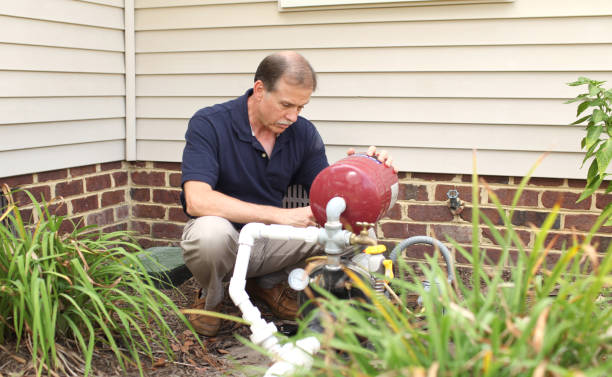
He eventually settled on a high-capacity Activated Carbon Filtration System installed at the building’s point of entry. Carbon is the “kryptonite” for chlorine; it uses a process called adsorption to trap the chlorine molecules and DBPs before they ever enter the individual apartments’ plumbing.
The result was immediate. Tenants reported that the “pool smell” vanished overnight. The “slimy” feel on their skin disappeared, and the water tasted “crisp” rather than “chemical.” By taking proactive action, the landlord didn’t just solve a complaint; he upgraded the living standard of the entire building.
Lessons for Other Hudson County Property Owners
This case study offers several takeaways for landlords in Jersey City, Hoboken, and Bayonne:
- Listen to “Subjective” Complaints: Just because the water passes a basic city test doesn’t mean it’s high quality. Odor and taste are valid indicators of chemical concentrations.
- Infrastructure Matters: Your building’s proximity to treatment facilities or distribution hubs can drastically change the chemical profile of your water.
- Filtration is an Asset: In 2026, filtered water is no longer a luxury; it’s an expected amenity. Marketing a building as having “Full-Building Water Filtration” is a major selling point for health-conscious renters.
On our Water Contamination Guide blog, we frequently feature stories of property owners who have turned water quality challenges into competitive advantages by investing in modern technology.
The Regulatory Landscape in 2026
As of 2026, the EPA has tightened its oversight on disinfection byproducts, recognizing that the chemicals we use to clean the water can sometimes become the problem themselves. While municipalities are doing their best to balance safety with palatability, the “last mile” of filtration—at the building level—is increasingly becoming the responsibility of the property owner.
Conclusion
The Jersey City landlord who faced a chlorine crisis learned that water is a dynamic resource. It isn’t just a utility that you pay for; it’s an environment that your tenants live in. By moving beyond the “it’s the city’s problem” mindset and taking ownership of the water quality within his walls, he ensured the long-term viability of his investment and the well-being of his residents.
If you are a landlord or a homeowner dealing with persistent chemical odors or tastes in your water, you don’t have to navigate it alone. Contact us today for more information on how to test for specific disinfection byproducts and which filtration systems are best suited for multi-unit properties in Hudson County.