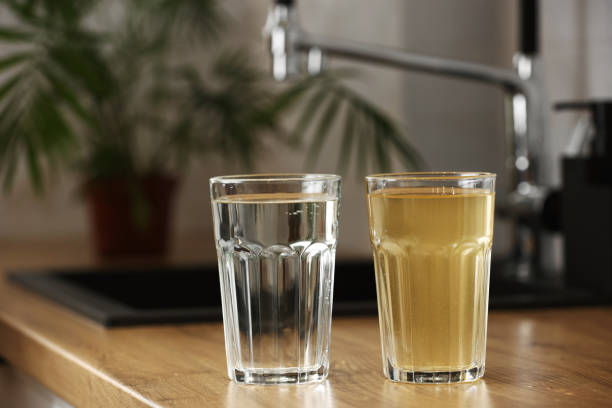
In the booming residential pockets of Jersey City—from the historic brownstones of Van Vorst Park to the sleek new developments in Journal Square—homeowners often take pride in the modern finishes of their living spaces. For a young professional living in a recently converted condo near Hamilton Park, the water seemed to match the aesthetic: it was crystal clear, poured with great pressure, and showed no signs of the “rusty” discoloration often associated with older cities.
However, there was a persistent problem that no amount of visual inspection could solve. Every morning, the first glass of water tasted distinctly like a handful of old pennies. This “metallic” tang was subtle at first, but over several months, it became impossible to ignore, eventually ruining the flavor of coffee and home-cooked meals.
This scenario—where water looks pristine but tastes like metal—is a growing concern in Jersey City’s high-density housing. It highlights a critical gap in our understanding of water safety: the difference between “clean-looking” water and chemically balanced water. In many cases, the culprit isn’t the city’s supply, but the hidden chemical reactions occurring within the building’s own walls.
The Science of the “Metallic” Taste
When water tastes like metal, it is usually because minerals or metals from the plumbing have dissolved into the liquid. While iron and manganese are common culprits that often leave stains, the most frequent cause of a “penny-like” taste in modern Jersey City condos is copper leaching.
Copper is the industry standard for high-quality plumbing, but it is not inert. Under certain conditions, water can become “aggressive” or corrosive. This slightly acidic water slowly eats away at the interior of the copper pipes, pulling microscopic amounts of the metal into the water stream. This process is often invisible to the naked eye because copper doesn’t turn the water brown like rust; instead, it remains dissolved, leaving the water clear but imparting a sharp, bitter, or metallic flavor.
As we detail in our guide to contaminant types, metallic tastes can also be a sign of zinc leaching from galvanized fittings or, more rarely, the presence of lead if the building utilizes older “lead-free” brass fixtures that were manufactured before modern low-lead standards.
Why New Condos Face Old Problems
One of the most confusing aspects for the Hamilton Park resident was that their building was “new.” How could a building less than ten years old have pipe issues?
The answer often lies in the water’s chemistry and “stagnation time.” In many Jersey City condos, residents are away for long hours at work or traveling on weekends. When water sits motionless in copper pipes for 8 to 12 hours, the “contact time” between the water and the metal increases. If the building’s water pressure is high or if the water has a low pH, the leaching process accelerates.
Furthermore, many Jersey City developments are part of larger “re-purposed” neighborhoods where new internal plumbing connects to much older municipal mains. While the Jersey City Municipal Utilities Authority (JCMUA) works tirelessly to manage the alkalinity of the water to prevent corrosion, localized factors—such as the building’s specific booster pumps or the presence of “dissimilar metals” in the plumbing—can trigger an electrochemical reaction that pulls metals into your glass.
The Health Implications of Metallic Water
While a metallic taste is often dismissed as an “aesthetic” issue, it shouldn’t be ignored. Chronic exposure to elevated levels of certain metals can have measurable health impacts.
For instance, while the body needs small amounts of copper, excessive intake can lead to gastrointestinal distress, including nausea and stomach cramps. Over the long term, higher concentrations of metals in drinking water can put unnecessary strain on the liver and kidneys. Perhaps more importantly, a metallic taste is a “canary in the coal mine.” If the water is corrosive enough to leach copper, it may also be leaching lead from older solder joints or brass components hidden within the building’s infrastructure.
How to Diagnose the Issue in Your Building
If you live in a Jersey City condo and are experiencing this metallic tang, you can take a few diagnostic steps before calling in the pros:
- The “First Draw” vs. “Flushed” Test: Fill a glass of water first thing in the morning (the “first draw”) and taste it. Then, run the cold water for two minutes and taste it again. If the metallic taste disappears after flushing, the problem is almost certainly originating from the pipes inside your building.
- Check the Fixtures: Inspect the base of your faucets and the inside of your toilet tanks. Do you see any faint blue-green staining? This is a classic sign of copper corrosion.
- Consult the FAQs: Many residents turn to our FAQ section to understand if their landlord or HOA is responsible for water testing when the taste changes. Generally, the city is responsible for the water at the curb, but the building is responsible for the water in the pipes.
Finding Permanent Solutions
For the resident in Hamilton Park, the solution wasn’t just “letting the water run.” While flushing works, it is a waste of a precious resource and doesn’t address the underlying chemical imbalance.
Depending on the results of a professional water test, there are several solutions that are becoming standard in Hudson County condos:
- Point-of-Use Reverse Osmosis (RO): These systems use a specialized membrane to strip out dissolved metals, including copper, lead, and zinc. This provides a final “polishing” step that removes the metallic taste entirely.
- Ion-Exchange Filters: Specialized filter cartridges can be used to target and remove heavy metals through a chemical exchange process.
- Neutralizing Filters: If the building’s water is found to be consistently acidic, a neutralizing filter can be installed at the point of entry to raise the pH and stop the pipes from leaching in the first place.
On the Water Contamination Guide blog, we frequently review which filtration brands are performing best against the specific mineral profiles found in Northern New Jersey.
The Importance of Advocacy
In multi-unit buildings, a metallic taste is rarely confined to a single apartment. If you are tasting metal, your neighbors likely are too. In Jersey City, where HOAs and Condo Boards manage large-scale infrastructure, presenting data is key.
The EPA has strict guidelines under the Lead and Copper Rule, and while these primarily apply to public water systems, they serve as an excellent benchmark for what constitutes “safe” levels in your home. By organizing a group of residents to perform a joint water audit, you can often convince building management to invest in building-wide corrosion control or filtration upgrades.
Conclusion
The case of the “fine-looking but metallic-tasting” water in Jersey City is a reminder that our senses can sometimes be contradictory. Clear water is a good sign, but it isn’t a guarantee of purity. In the urban landscape of 2026, where we are often “stacking” new technology on top of old infrastructure, the chemistry of our water requires closer attention.
If you’re tired of your morning coffee tasting like metal, don’t just “get used to it.” You can contact us today to learn more about localized testing kits and the best filtration options for the unique water challenges of Hudson County.
Whether you’re in a historic conversion or a brand-new tower, the water in your home should be as crisp and clean as the skyline views outside.