For many Staten Island residents, the dream of a home renovation is a labor of love. Whether it’s updating a mid-century kitchen in Westerleigh or adding a master suite to a classic colonial in New Dorp, the goal is always the same: to increase comfort and property value. However, for one local homeowner, a recent $50,000 plumbing and kitchen overhaul resulted in a persistent, unsettling surprise that wasn’t on the mood board—cloudy, milky-looking water pouring from a brand-new, high-end faucet.
This “shock” is becoming a frequent topic of conversation across the North and South Shores. While we often associate water quality issues with aging infrastructure, this case study proves that even—and sometimes especially—after a renovation, the quality of what comes out of the tap can be compromised. Understanding why “new” doesn’t always mean “clean” is essential for anyone planning a home project on Staten Island.
The “Air Bubble” Theory vs. Chemical Reality
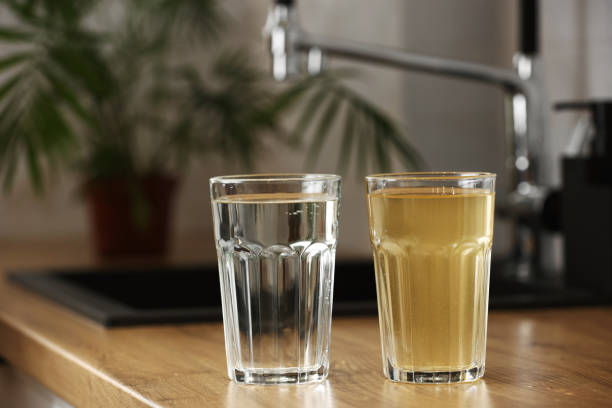
When the homeowner first noticed the cloudiness, the contractor offered a standard explanation: it’s just air. It is common for new plumbing to trap air pockets during installation. When air is trapped under pressure, it dissolves into the water and creates a “milky” appearance that clears from the bottom up once the glass sits for a minute.
But in this instance, the cloudiness didn’t always clear. Even more concerning, a slight “slick” or oily sheen began to appear on the surface of the water used for boiling pasta. This prompted the homeowner to look deeper into contaminant types that can be introduced during the construction process.
While air bubbles are harmless, cloudy water after a renovation can also be caused by “particulate surge.” When pipes are cut, soldered, or moved, mineral scale that has been dormant for decades inside the main service lines can be dislodged. This sediment isn’t just unsightly; it can harbor heavy metals and synthetic residues that have adhered to the pipe walls over time.
Why Renovations Can Compromise Water Quality
Staten Island has a unique water profile. Most of our water travels through a massive network of tunnels from the Hillview Reservoir in Yonkers. By the time it reaches a home in Tottenville or St. George, it has traveled miles. When a homeowner opens up their walls to replace internal pipes, they are essentially disturbing a settled system.
There are three primary ways a renovation can lead to a sudden drop in water quality:
- Solder and Flux Residue: Modern plumbing uses “lead-free” solder, but the flux (the cleaning agent used to prep the pipes) can temporarily leach into the water stream, causing a cloudy or oily appearance.
- Cross-Contamination: If a contractor accidentally creates a “cross-connection” between the potable water and a non-potable source (like a heating system or a garden hose line), contaminants can backflow into the drinking water.
- Sediment Displacement: The vibration from jackhammering or heavy drilling can shake loose iron and manganese deposits from the older municipal pipes leading into the house, resulting in “turbidity” or cloudiness.
For those worried about the long-term effects of these incidents, reviewing the health impacts of various particulates is a critical next step.
The Role of Modern “Forever Chemicals” in New Construction
Perhaps the most surprising discovery for the Staten Island homeowner was the role of synthetic materials. During the renovation, the contractor used PEX (cross-linked polyethylene) piping—a flexible, durable alternative to copper that is now the industry standard.
While PEX is generally considered safe, some studies have shown that brand-new plastic piping can leach trace amounts of chemicals, including “forever chemicals” (PFAS) and VOCs (volatile organic compounds), during the initial months of use. This can result in a plastic-like taste or a slight cloudiness that isn’t related to air bubbles.
According to the New York State Department of Health, the state is currently implementing some of the nation’s strictest monitoring for these types of contaminants, but those standards apply to the water at the treatment plant, not necessarily the water that has sat overnight in a newly installed PEX line in a Staten Island basement.
Moving from Panic to Solutions
After realizing the cloudiness wasn’t going away, the homeowner turned to the resources found in our FAQ section. The first recommendation for any post-renovation water issue is a “comprehensive flush.” This involves running all cold-water taps for 20 to 30 minutes to clear out any installation debris and stagnant water.
However, when flushing wasn’t enough, the family realized they needed more permanent solutions. Many Staten Island residents are now opting for:
- Whole-House Sediment Filters: These are installed at the point of entry to catch the “particulate surge” caused by local construction or aging street mains.
- Under-Sink Reverse Osmosis (RO): For drinking and cooking, RO provides a multi-stage barrier that removes the microscopic chemical residues that standard filters might miss.
These upgrades are becoming as standard as marble countertops in modern Staten Island renovations, as homeowners realize that the “bones” of the house are only as good as the water running through them.
A Community-Wide Trend
This homeowner’s story isn’t an isolated incident. Across the Water Contamination Guide blog, we have documented similar reports from Great Kills to Port Richmond. The common thread is a lack of awareness regarding “installation-era contamination.”
We often think of water safety as a municipal responsibility, but the “last mile” of water delivery—from the street to your faucet—is entirely the homeowner’s domain. When you renovate, you are taking ownership of that infrastructure.
The EPA emphasizes that while public water systems are highly regulated, internal building plumbing is the primary source of many water quality issues, particularly after the plumbing has been disturbed.
Conclusion
For the Staten Island homeowner who was shocked by their cloudy water, the story had a happy ending. After a professional water test revealed elevated turbidity and trace VOCs from the new piping, they installed a high-efficiency filtration system that restored the water to its pristine state.
Their experience serves as a valuable lesson for anyone planning a home project: build water testing and filtration into your renovation budget from day one. A beautiful kitchen is only truly functional if the water is as clean as the new fixtures it flows through.
If you have recently completed a renovation and are noticing changes in your water’s color, taste, or clarity, don’t ignore it. You can contact us today for guidance on local testing resources and filtration options tailored to Staten Island’s unique water profile.