For many renters moving into the North Shore or the increasingly popular Mid-Island neighborhoods of Staten Island, the “New York City water” reputation precedes itself. We are often told it is the “champagne of tap water,” sourced from the pristine Catskill and Delaware watersheds. However, a recent case involving a multi-family rental unit near St. George has highlighted a different reality: the delicate chemical balance required to keep that water safe can sometimes fail long before it reaches your kitchen table.
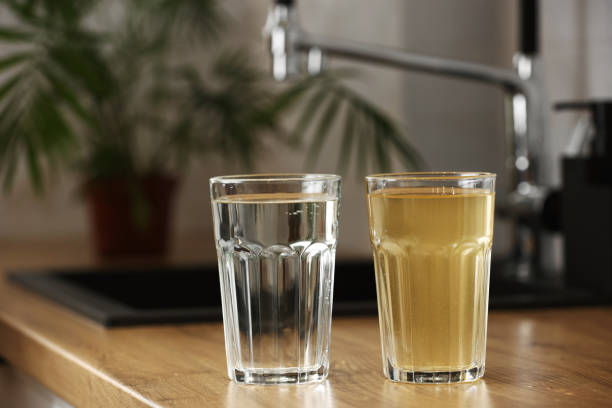
In this specific instance, a group of tenants began noticing a faint, earthy odor in their water, accompanied by a slight “slimy” feel to the bathroom fixtures. When an independent test was conducted, the results were startling. The water entering the building had almost no detectable residual chlorine. Without this critical disinfectant, the building’s internal plumbing had become a breeding ground for biofilm, leading to a localized disinfection crisis that the municipal system’s broad reports never captured.
The Role of Chlorine: The Silent Guardian
To understand why low chlorine is a problem, one must first understand why it is there. Chlorine is added to the New York City water supply as a secondary disinfectant. Its primary job isn’t just to kill bacteria at the treatment plant; it is to maintain a “residual” level that protects the water as it travels through miles of underground pipes.
Think of chlorine as a traveling security guard. As water moves from the Hillview Reservoir, through the tunnels under the harbor, and finally into the aging iron mains of Staten Island, it encounters various contaminant types—including microscopic pathogens and organic matter. If the chlorine levels drop too low, that “security guard” is no longer on duty, and bacteria can begin to colonize the interior walls of the pipes.
According to the NYC Department of Environmental Protection (DEP), the city maintains strict target ranges for chlorine. However, in “dead-end” water mains or buildings with low occupancy, the water can sit stagnant for too long, causing the chlorine to dissipate naturally.
When Stagnation Meets Rental Reality
In the case of the St. George rental, the building had several vacant units. Water that sits in the pipes of an empty apartment for weeks at a time undergoes a process called “chlorine demand.” The chemical reacts with the pipe materials and any existing organic film until it is completely “used up.”
Once the chlorine is gone, the water is effectively unprotected. This allows for the growth of Legionella, non-tuberculous mycobacteria, and other opportunistic pathogens. For the tenants in the occupied units, the lack of “fresh” water moving through the building’s core meant they were receiving water that had lost its disinfection power.
The health impacts of consuming or even showering in poorly disinfected water can be significant. While most healthy adults may only notice a slight skin irritation or a “musty” taste, vulnerable populations—including the elderly or those with compromised immune systems—are at a higher risk for respiratory issues if these bacteria become aerosolized in a shower.
Why Staten Island Renters Are Often the Last to Know
The unique challenge for Staten Island renters is the “last mile” of the water’s journey. By the time water reaches a borough that sits at the literal end of the city’s distribution line, it has had the most time for chlorine levels to fluctuate.
Furthermore, renters rarely see the official water quality reports. These are typically sent to the “owner of record” or the management company. If a landlord isn’t proactively flushing the lines of vacant units or maintaining the building’s backflow prevention devices, the tenants are the ones who bear the brunt of the water quality drop.
Many renters have turned to our FAQ section to ask who is responsible for water testing in a rental. While the city ensures the water is safe at the street level, the landlord is generally responsible for the integrity of the building’s internal plumbing.
Finding Long-Term Solutions for Tenants
For the tenants in the St. George building, the solution required a two-pronged approach. First, the landlord was required to perform a “shock chlorination” of the building’s pipes and establish a regular flushing schedule for vacant units to ensure fresh, chlorinated water was always present.
Secondly, many of the tenants opted for individual solutions to provide an extra layer of safety. These included:
- Point-of-Use Carbon Filters: High-quality carbon blocks can remove the “byproducts” of disinfection (like TTHMs) while also catching the sediment that bacteria often cling to.
- UV Sterilization: Some residents in the building installed small UV light systems under their sinks, which provide a final, non-chemical “kill step” for any bacteria that might have survived the low-chlorine environment of the building’s pipes.
The Importance of Proactive Testing
This incident serves as a wake-up call for anyone living in a multi-family dwelling on Staten Island. You cannot assume that because the city’s water is “award-winning” at the source, it is perfectly disinfected at your tap.
As we discuss on the Water Contamination Guide blog, water quality is dynamic. It changes based on the weather, the age of your street’s pipes, and the occupancy of your building. If you notice a change in the smell, taste, or “feel” of your water, it is often a sign that the disinfection balance has been disrupted.
The EPA notes that maintaining a detectable disinfectant residual is a cornerstone of the Safe Drinking Water Act. If that residual is missing, the safety of the water is no longer guaranteed.
Conclusion
The story of the St. George rental is a reminder that water safety is a shared responsibility between the city, the landlord, and the resident. Low chlorine levels might seem like a technicality, but they are the difference between water that is a life-sustaining resource and water that is a potential health hazard.
If you are a renter on Staten Island and are concerned about the disinfection levels in your building, don’t wait for a municipal notice. You can contact us today for guidance on how to perform a simple chlorine residual test and what steps you can take to protect your household.
Whether you live in a new luxury development or a historic Richmond Town rental, you have a right to water that is not just clear, but properly protected.